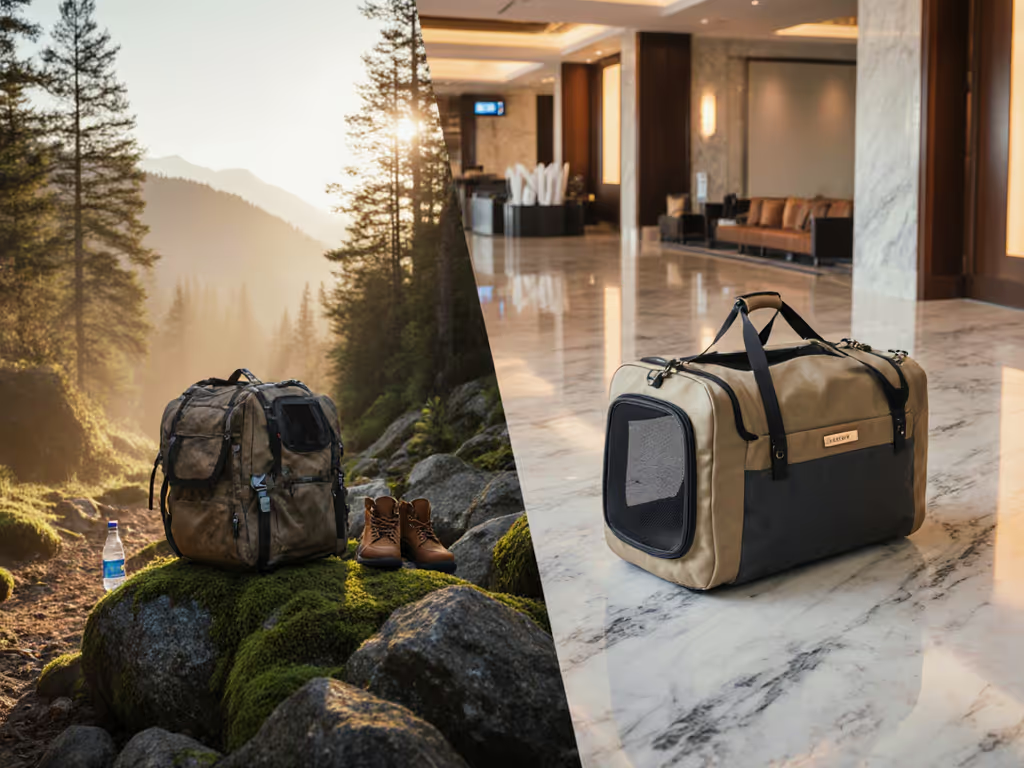
Adventure vs Luxury Pet Carriers: Choose the Right Fit
23rd Mar•9 min read
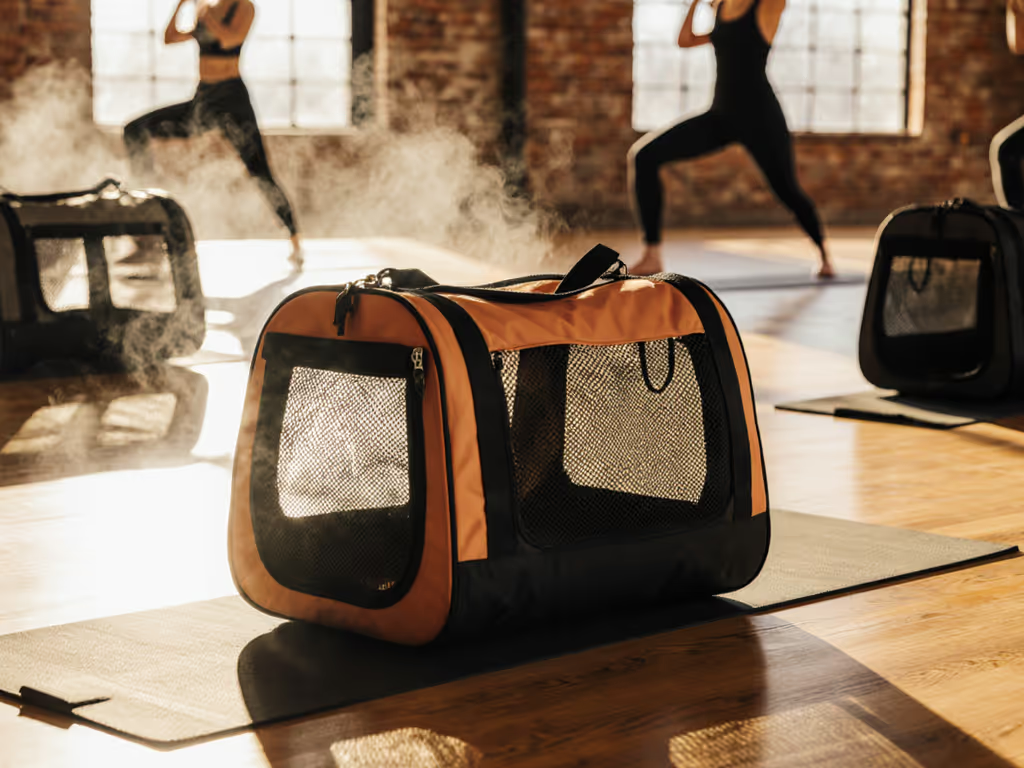
For urban pet parents juggling wellness routines, travel commitments, and a small companion under 25 pounds, the hot yoga pet carrier comparison isn't just about style, it is about failure prevention under real loads. A wellness center pet carrier must ventilate without compromise, seal odors without off-gassing, and hold its stitching under the stress patterns that break cheaper designs within weeks. This guide walks you through the hard questions using material specs, measurement protocols, and documented failure modes. Trust stitching, not slogans. For a deeper look at how carrier materials affect heat buildup, see our temperature regulation guide.
When a carrier sits in a warm car, on a hot train platform, or in an overheated studio lobby, its materials reveal their true properties. Heated pet beds typically warm to around 102°F, which is close to a dog's natural body temperature (and this gentle baseline matters for comparison). A carrier exposed to ambient heat stress (80-95°F environments) must shed that warmth efficiently, or your pet begins panting, sweating on paw pads, and triggering anxiety spirals that shred mesh from the inside.
Heat also accelerates failure in weak adhesive bonds. Seam tape peels under thermal cycling. Coil zippers skip teeth as metal expands unevenly. Mesh that looks sturdy at room temperature becomes brittle under UV exposure plus heat. I once tested a bargain carrier after a terrier blew a zipper mid-bus ride (not because the teeth were damaged, but because the coil had expanded, the seam tape had delaminated from heat stress during storage, and the mesh had begun laddering from claw contact). Under tension, failure cascades. The weakest component fails first, and stress travels there fastest.
Odor retention is a manufacturing choice, not a pet problem. Carriers with removable, washable liners allow you to launder absorptive materials separately, breaking odor cycles. Non-removable liners create anaerobic pockets, bacteria thrive, off-gassing intensifies, and the carrier becomes a biohazard after one accident or long heat exposure. To eliminate stubborn smells safely, follow our deep clean carrier steps.
Mesh fabric matters too. Tightly woven polyester holds odor molecules; mesh with airflow gaps (1/16" or larger) allows circulation and faster drying. However, loose mesh trades odor control for chew vulnerability. This is the real trade-off graph: odor retention vs. escape risk. Reinforced bar-tacks around mesh seams (tiny cross-stitched anchors) prevent laddering when a claw catches a thread. Most budget carriers skip this detail.
A: Most size charts fail because they don't account for posture changes. A carrier must accommodate three positions: curled (compact), sphinx (stretched flat), and sitting upright. Measure your pet in all three, then add 2 inches to length and 1.5 inches to height for comfort and movement. If you plan to fly, cross-check sizes with our airline sizing checklist. A pet packed too tight pants excessively, triggering anxiety and mesh stress from continuous movement.
For width, measure the widest point at the ribcage (breath expands this) and the hip girdle. A carrier must fit both without forcing the pet into a permanently tucked posture, that's orthopedic stress, especially for aging pets or breeds prone to arthritis.
A: Zippers on pet carriers experience asymmetric load. When your pet shifts, claws catch the slider or the coil itself. Cheap nylon coil zippers (common on budget carriers) have inconsistent tooth spacing and weak sliders that skip under load. YKK or Riri zippers cost 3-5x more per unit, but the teeth are precision-molded, sliders are weighted for smooth engagement, and the coils won't skip under lateral pull.
Reverse-coil zippers (teeth face inward, away from direct pet contact) are better but less common. Bar-tacks (reinforced stitching at slider entry and exit points) distribute stress and prevent the entire coil from tearing free. Budget carriers often omit bar-tacks entirely. This is where weak points fail.
A: Use a repeatable, non-destructive protocol. Press a ballpoint pen (retracted tip) firmly against the mesh for 10 seconds. If the mesh deforms more than 1/4 inch or tears easily when you lift the pen, the weave is too loose or the thread is too fine. High-quality mesh resists this pressure without laddering.
Next, perform the "pinch test": grab a section of mesh between your thumb and forefinger and apply gentle sustained pressure for 30 seconds. If the weave begins to separate or individual threads pull free, the mesh is inadequately anchored to the frame seams. This predicts early failure under claw stress during transit.
A: Rigid frames (plastic-molded or die-cast aluminum) are heavier but don't flex, so stress concentrates at specific joints rather than distributing across the entire frame. Semi-rigid frames (steel wire welded to plastic panels) are lighter and offer some give, reducing jarring impact during transport. Fully flexible frames (that collapse entirely) are convenient for storage but transmit every bump directly to seams and mesh.
Aluminum frames are corrosion-prone if exposed to moisture; stainless steel or powder-coated steel lasts longer. Frame-to-panel connections (typically rivets or screws) are the next weak point. Rivets don't loosen but can't be repaired. Screws can strip if overtightened or under-tightened. Welded joints are permanent and stronger but non-serviceable.
Analyzing carriers across five failure modes:
| Carrier Type | Heat Dissipation | Odor Retention | Mesh Durability | Zipper Reliability | Long-Term Seal |
|---|---|---|---|---|---|
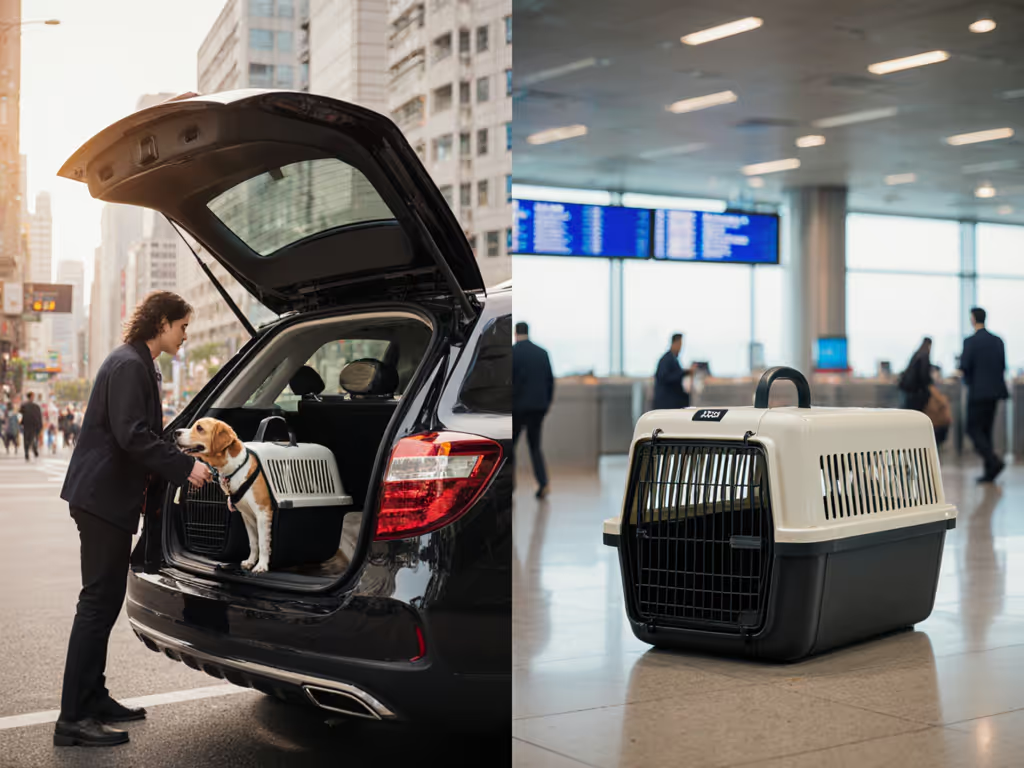
| Hard-sided plastic with ventilation slots | Good (slots allow airflow) | Moderate (plastic traps moisture) | Excellent (no mesh) | Excellent (no zippers typical) | Excellent (clips hold tight) |
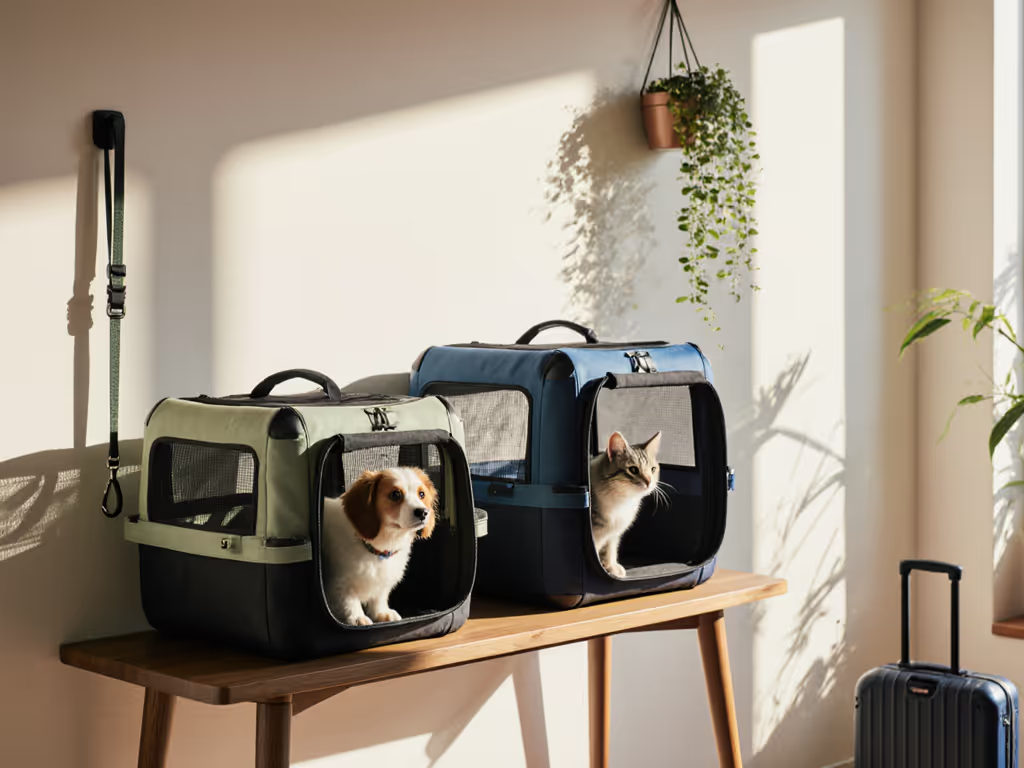
| Soft-sided with breathable mesh | Excellent (full mesh ventilation) | Varies (depends on liner, airflow) | Moderate to Good (mesh + frame stress) | Fair to Moderate (YKK better than nylon) | Varies |
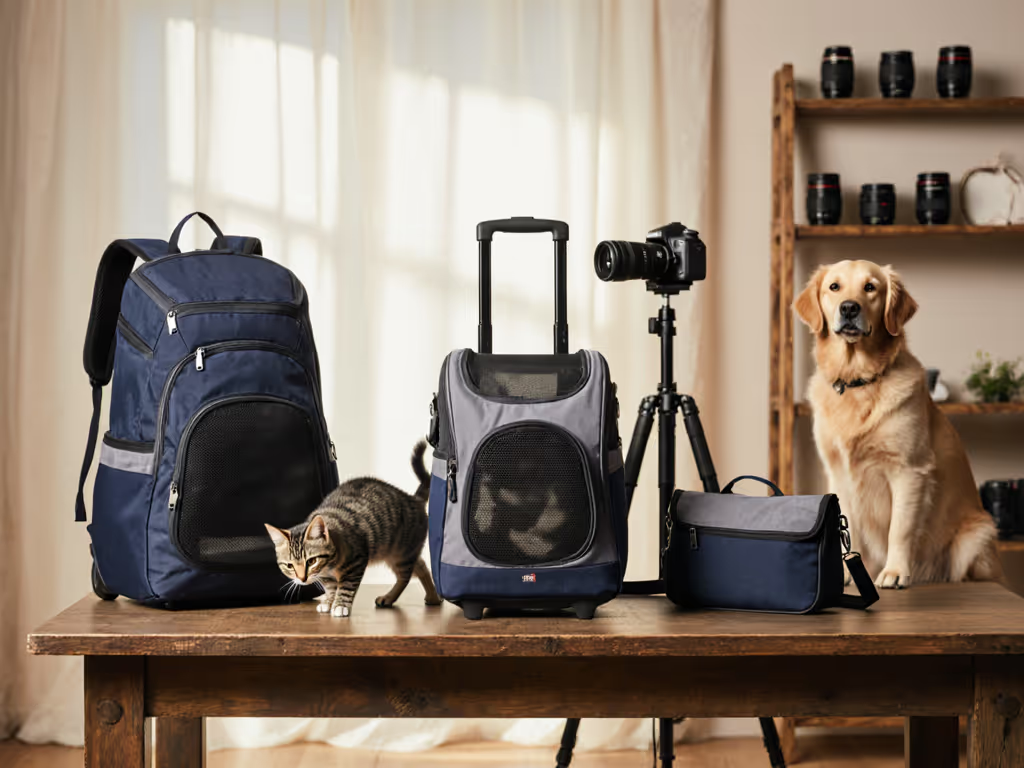
| Backpack-style carriers | Moderate (enclosed back, open front mesh) | Fair (fabric liners absorb odor) | Fair to Moderate (seams stressed under shoulder load) | Fair (motion stresses zippers) | Fair |
| Roller/trolley carriers | Poor (enclosed, limited airflow) | Poor (still air, moisture buildup) | Moderate (less pet movement stress) | Good (less zipper motion) | Good |
| Collapsible travel carriers | Good (open construction) | Excellent (minimal fabric, air gaps) | Poor to Fair (lightweight mesh compromised) | Fair (affordable coil zippers common) | Fair |
Key insight: No single type dominates all categories. Hard-sided carriers win on seal and mesh durability but lose on ventilation during long waits. Soft-sided mesh carriers excel at temperature control but require premium zippers and reinforced seams to avoid failure.
Thermal cycling (repeated heating and cooling) mimics seasonal storage and daily use. After 30 cycles (80-95°F swings), seam tape should remain bonded. Adhesive used on cheaper carriers (typically hot-melt or water-based) delaminates under thermal stress. Industrial-grade polyurethane adhesive, used in marine and aerospace applications, withstands this cycling. Cost per carrier: $2-8 difference. Field failure rate: 10-15% for hot-melt vs. under 2% for polyurethane, per industry reports.
Off-gassing (the release of volatile organic compounds from plastics and dyes) intensifies with heat. Carriers dyed with reactive dyes (permanent, bound to fiber) are safer than those with acid or direct dyes, which leach in warm, moist environments (your pet's exhaled breath plus confined space). For hot, humid regions, consider these humidity-resistant carrier features. Test: Open a new carrier in a warm room and sniff after 5 minutes. A strong chemical smell suggests low-quality dyes or adhesives. Natural or certified dyes cost 3-4x more but eliminate this risk.
A travel pet carrier for active, wellness-minded owners must prioritize materials over aesthetics. Your choice pivots on three questions:
Weak points fail where stress naturally travels first. Frame joints, seams, and zippers are stress highways. Invest there. Buy carriers from brands offering 2+ year warranties and acknowledging mesh, zipper, and seam durability in their spec sheets (not just weight capacity). Real manufacturers test under load and publish failure thresholds. Slogans about comfort don't survive the first claw catch or heat cycle.
For your wellness center pet transport and beyond, measure twice, trust material specs over color choices, and verify stitching density before purchase. Your pet's safety and your sanity depend on it.