Pet Carrier Materials: Microbiome & Skin Health
19th Mar•8 min read
Pet carrier ventilation science and carrier airflow optimization aren't afterthoughts; they're foundational to keeping your companion calm during transit. Understanding how air moves through your carrier and why it matters transforms a travel crate from a stressful box into a predictable, safe space. Calm begins long before you zip the door.
When we talk about ventilation, we're addressing both the physical reality of oxygen flow and the psychological reality of your pet's arousal state. A carrier that breathes well regulates temperature, reduces CO2 buildup, and signals safety to your animal. Poor ventilation does the opposite, it triggers panic, motion sickness, and the desperate escape attempts that lead to broken zippers and heartbreak at the gate.
Your pet's stress response is partly neurological and partly physiological. Inadequate breathable pet carrier materials and restricted airflow create a cascade: temperature rises, humidity climbs, oxygen levels drop microscopically. Your pet's nervous system doesn't distinguish between physical suffocation and the sensation of suffocation. Both trigger fight-or-flight. If your pet is noise- or light-sensitive, our sensory-friendly carrier guide shows features that calm overstimulation while preserving airflow.
A shepherd I once worked with had a soft-sided carrier that triggered full-body panic the moment she saw it. We assumed it was the enclosure itself, but when we analyzed the ventilation pattern, we discovered the mesh covered only three sides, and the roof was solid plastic. Her arousal wasn't a character flaw; it was an oxygen anxiety response. We started with the carrier's base detached, building micro-sessions around dinner so she associated it with calm and food-focus rather than suffocation. Within weeks, that same carrier became her predictable den.
This tells us something crucial: proper ventilation is inseparable from temperament work. Slow is smooth, smooth is calm, and smooth airflow is the foundation.
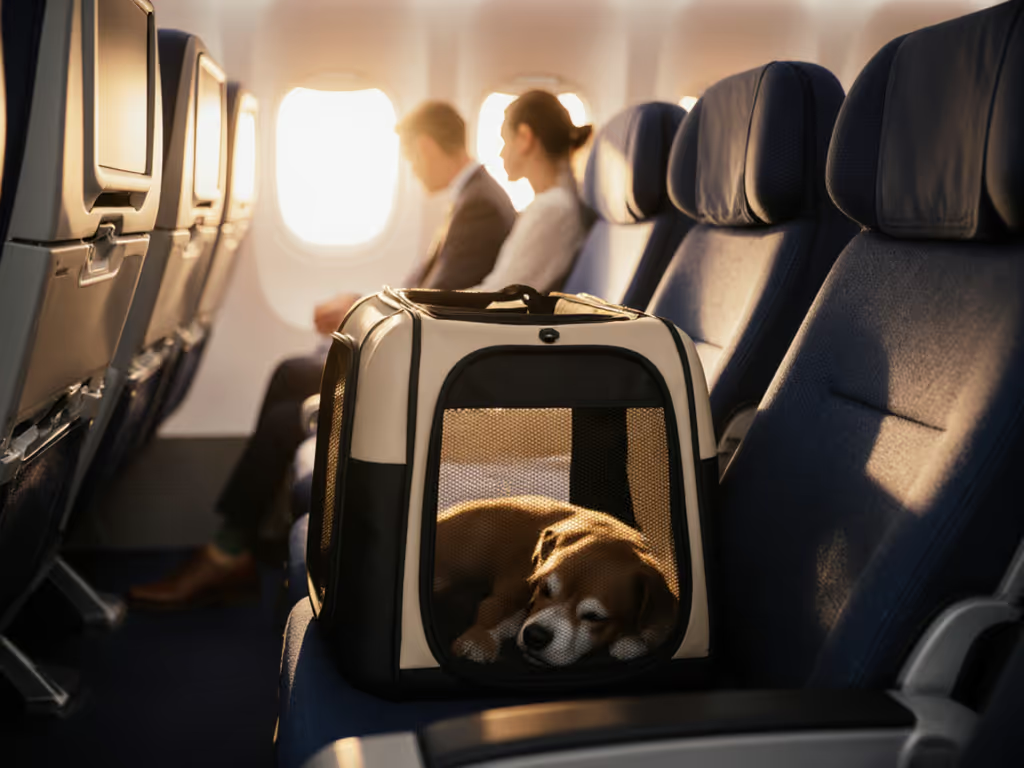
If you're flying, IATA (International Air Transport Association) sets the compliance bar. Understanding these standards helps you audit your carrier before check-in, avoiding gate surprises.
The minimum ventilated area must be at least 16 percent of the total surface area of the four sides. This isn't a suggestion; it's a non-negotiable checkpoint. Openings on the sides and back must be positioned over the upper two-thirds of the container, with the whole of one end (typically the door) made of welded wire mesh.
Why the upper placement? Hot air rises. Positioning upper vents captures warm air before it stagnates near your pet's face. Lower vents on the front and back provide secondary airflow that prevents corner dead zones where CO2 and stale air accumulate.
All mesh must be nose- and paw-proof, secured so your pet cannot dislodge it. For cats and small dogs, a second layer of welded wire mesh may be required to prevent escape.
You don't need lab equipment to verify your carrier meets standards. Here's a stepwise ventilation testing protocol:
Visual mesh audit: Hold the carrier to natural light. You should see light through mesh on all four sides. If one side is solid, it's non-compliant for air travel.
Surface area calculation: Take a tape measure and map each panel. Measure the total height × width of all four sides, then measure the total area of mesh/vent openings. Divide openings by total surface area. You need ≥16%. (For a 24"×16"×15" hard-sided crate, total surface area of four sides is roughly 1,200 sq. inches; you need at least 192 sq. inches of ventilation.)
Airflow observation: With your carrier sitting on a table, light a stick of incense or hold a light feather near each vent opening. Smoke and feathers should move away from the carrier, not stall. Stalling indicates poor external airflow or internal pressure buildup.
Pressure test (advanced): Close your pet out of the carrier, seal all openings except one vent, and gently blow into that vent with your mouth. Air should exit freely through other vents without significant resistance. High resistance suggests inadequate mesh area or blocked channels.
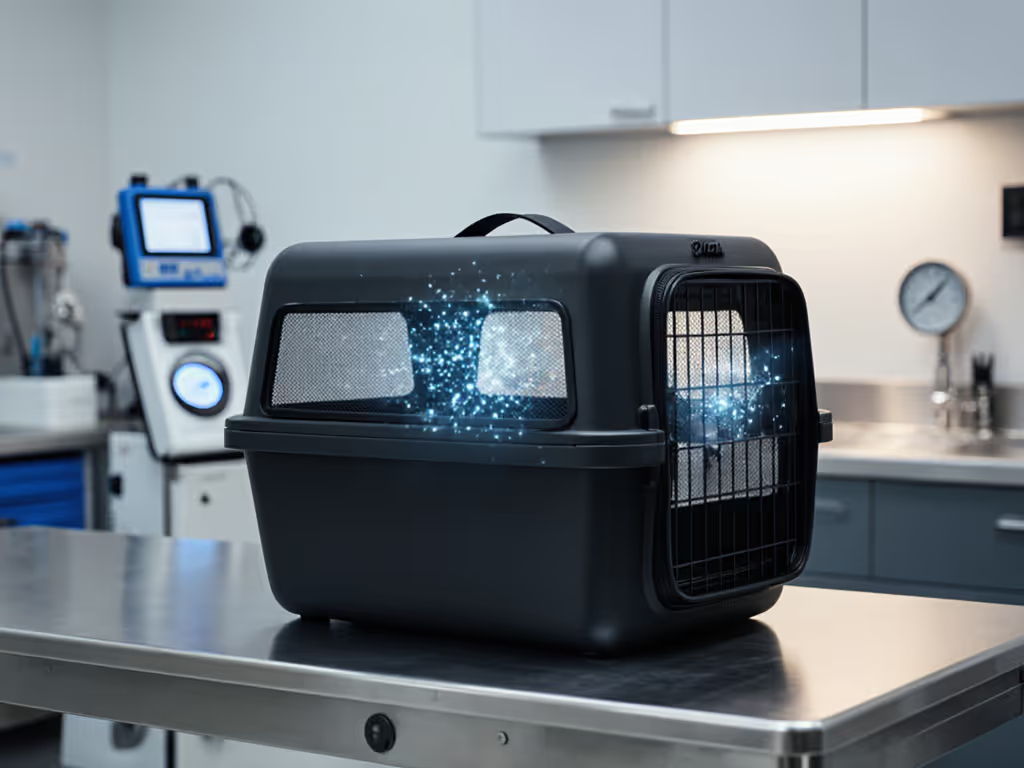
Material choice directly affects pet oxygen flow during travel and thermal regulation. Soft-sided carriers with mesh panels naturally outperform solid hard-sided models for airflow, but hard-sided carriers offer rigidity and crash protection that soft models lack. For the science behind fabrics, see our pet carrier material science explainer on breathability and thermal performance.
Look for multi-panel mesh construction (all four sides, not just front and back). The fabric itself should be breathable canvas, not vinyl or laminate. Avoid carriers with solid roofs; opt for mesh tops if available. Breathability is measured by how quickly air passes through the weave; dense canvas breathes slowly, while airy mesh breathes fast. When possible, test breathability by holding a damp cloth against the material outdoors. Water droplets should bead and not soak through immediately.
These typically feature plastic or resin walls with vented panels. The entire door frame should be welded wire mesh, not perforated plastic or small slots. Perforations reduce effective ventilation area and can entrap moisture. If the roof is solid, confirm the carrier includes upper-side vents positioned in the upper two-thirds as specified.
Some carriers include insulation to regulate interior temperature. Insulation isn't about blocking airflow; it's about dampening temperature swings. A well-insulated carrier with adequate ventilation stays cooler in heat (by reducing radiant absorption) and warmer in cold (by reducing heat loss). Without ventilation, insulation becomes a thermal trap.
Your pet's oxygen flow during travel depends on three factors: ventilation area, air exchange rate, and metabolic demand (which rises with stress and motion sickness).
A calm, resting pet consumes oxygen steadily. An anxious pet hyperventilates, consuming more oxygen and producing CO2 faster. This is why ventilation enables temperament work: better airflow reassures your pet's nervous system, which lowers metabolic demand, which reduces oxygen pressure inside the carrier.
Odor check: After your pet sits in the carrier for 15-20 minutes (unsealed, at home), does the interior smell stale or ammonia-tinged? Stale odor means CO2 accumulation; ammonia suggests urine stress response. Both indicate inadequate ventilation under stationary conditions. In motion, air exchange worsens.
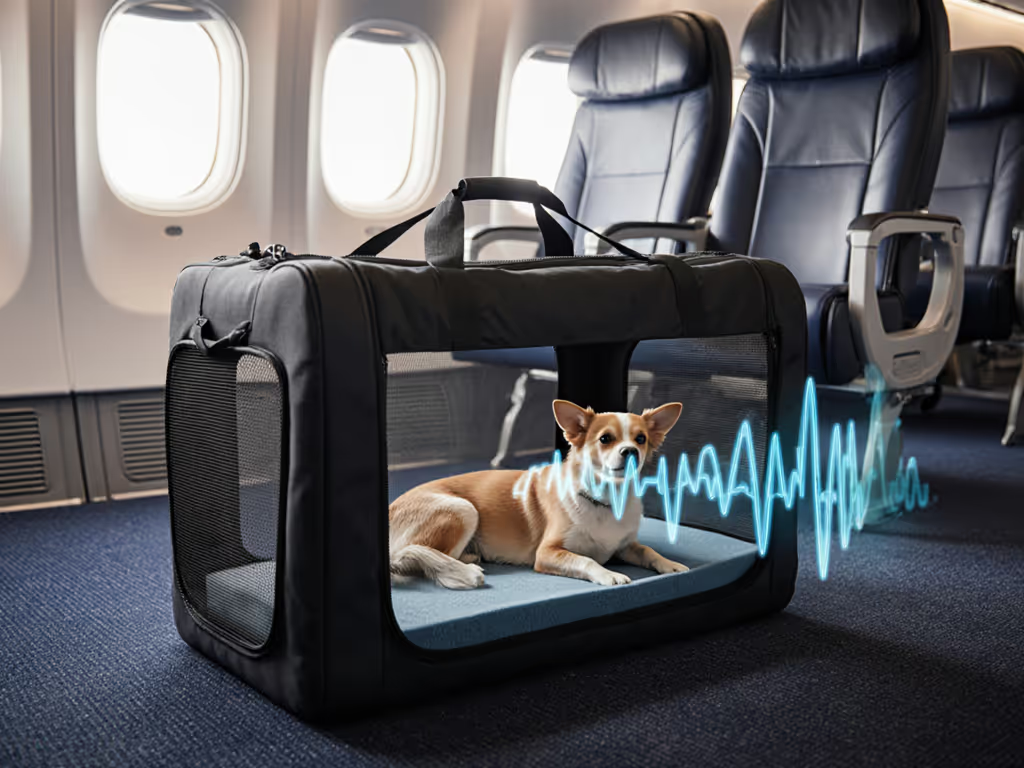
Pet breathing rate: Observe your pet's breathing inside the carrier over one minute. Normal resting rate for dogs is 10-30 breaths per minute; for cats, 20-40. Rates above these ranges during calm sitting suggest arousal due to poor airflow or confinement anxiety. Repeat the test with a privacy panel or blanket partially covering the carrier (to reduce visual stimulation). If breathing normalizes, arousal was behavioral, not oxygen-related. If it persists, ventilation is the culprit.
Humidity monitoring: A small digital hygrometer (under $10) placed inside a sealed carrier for 10 minutes shows internal humidity. Over 70% in cool conditions indicates moisture trapping. Over 80% in warm conditions signals heat stress risk. Carriers with adequate ventilation maintain near-ambient humidity.
Temperature control carrier design balances ventilation with thermal protection. The goal is stable interior conditions without drafts.
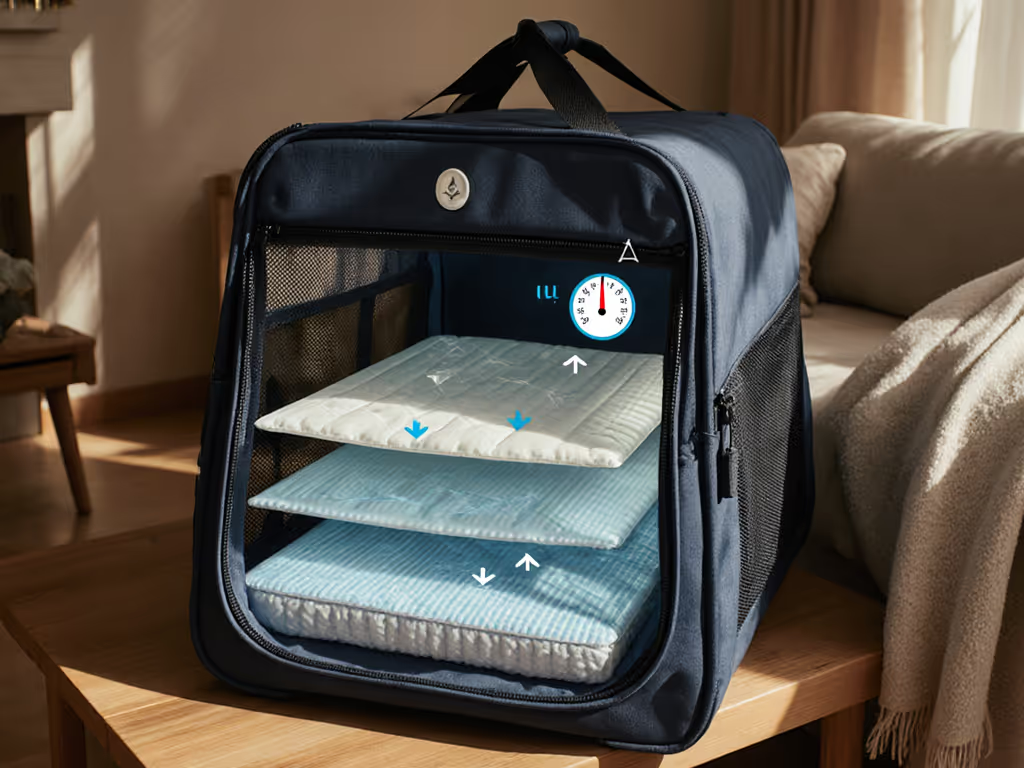
In warm months, prioritize airflow over insulation. Choose light-colored carriers that reflect heat. Confirm ventilation is unobstructed (no blankets covering mesh). Provide a cooling pad inside if the trip exceeds 30 minutes. Never park your carrier in direct sunlight, even briefly.
In cold conditions, you want retained heat without stagnant air. A fleece mat or thermal liner inside the carrier (not blocking mesh) provides insulation. Ensure ventilation openings aren't ice-blocked or snow-packed. Your pet's breath will naturally warm the interior if mesh allows moisture to escape; blocked vents trap condensation, which then chills your pet.
Spring and fall trips may involve temperature swings. A removable, reversible liner (cooling side in the morning, insulating side by evening) gives flexibility without re-purchasing carriers. For weather-specific picks and tips, see our seasonal ventilation and insulation guide.
Two weeks before travel, run through these actionable steps:
Week 2 Before Departure:
Week 1 Before Departure:
3 Days Before Departure:
Ventilation science isn't just physics; it's psychology. A carrier with measurable, adequate airflow communicates safety to your pet's nervous system. Combined with graduated acclimation (introducing the carrier slowly, building positive associations, practicing short trips), proper ventilation transforms confinement from a trigger into a predictable den.
This is the core of my work: a carrier should lower arousal, not contain it by force. That means designing and testing for airflow first, anxiety management second. When both align, travel becomes feasible for even sensitive pets.
Before your next trip, invest 30 minutes in these tests. Measure. Observe. Adjust. Your pet will thank you with a calm journey instead of panic at the gate.