Pet Carrier Ventilation Science: Testing Guide
27th Mar•9 min read
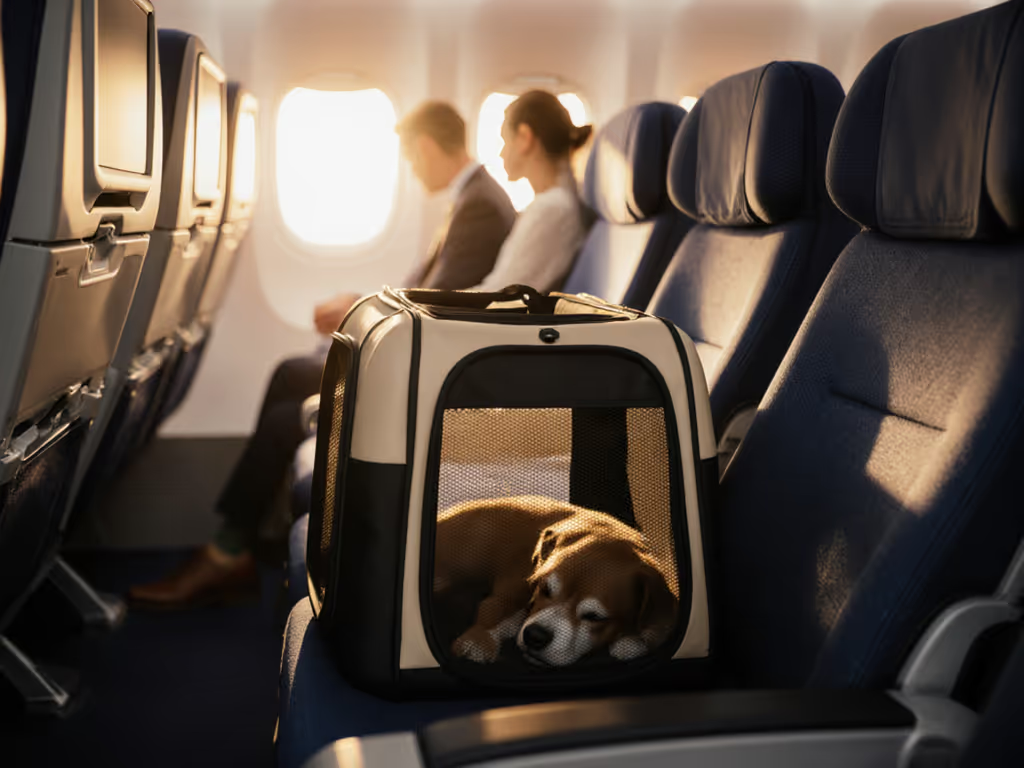
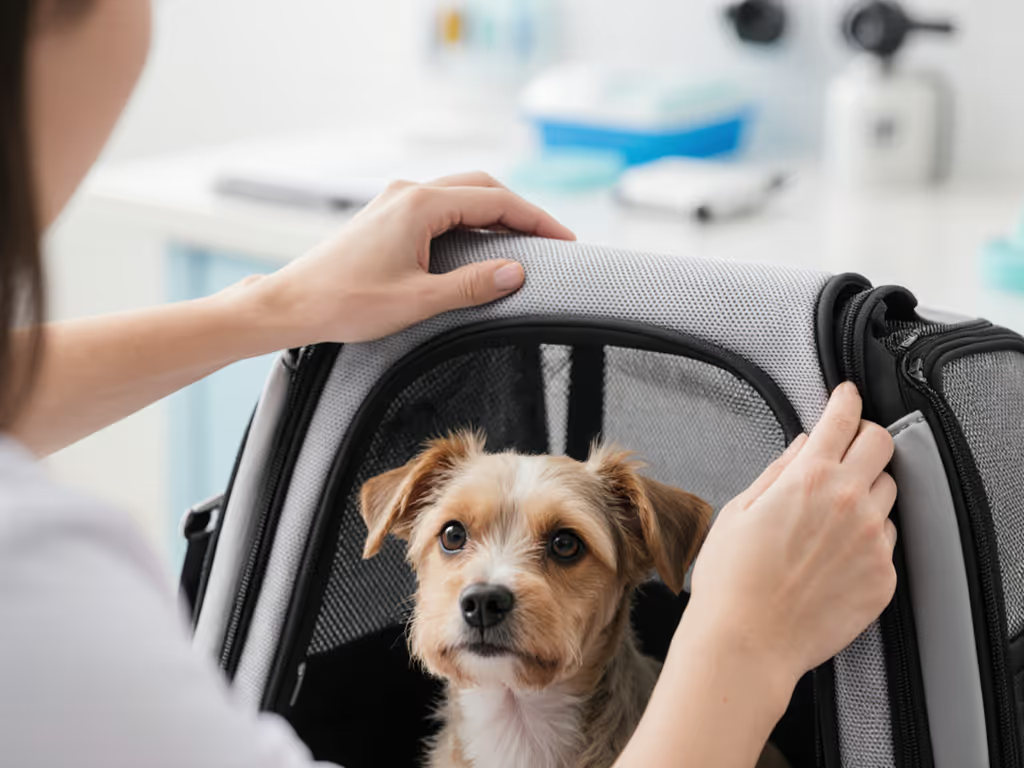
When your cat flattens against the carrier floor or your small dog trembles silently in transit, pet carrier travel isn't just inconvenient: it is violating deep-seated animal spatial psychology. Understanding this biological imperative transforms how we approach containment: not as a cage, but as a mobile den that aligns with instinctual needs. At Charles de Gaulle last month, I watched a sleek charcoal carrier (matching my overcoat seam for seam) sail through security while brighter bags drew stares. It wasn't if it met airline height rules, but how its dimensions respected feline spatial awareness. The agent nodded; my nervous cat remained hidden. Blend in visually, stand out in quiet function.
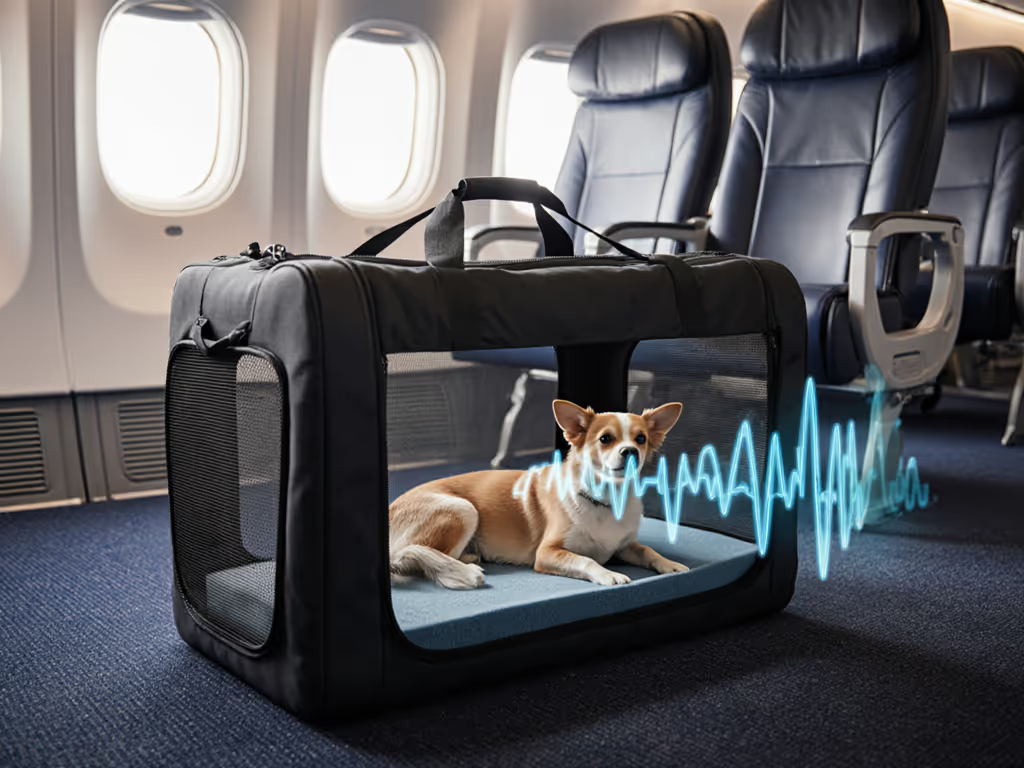
For urban travelers, the stakes are high. Airlines enforce hard-sided dimensions yet demand soft-sided flexibility. Before you book, cross-check your route's airline pet carrier regulations to confirm size, documentation, and under-seat allowances. Your Pug's brachycephalic breathing or your dachshund's elongated spine defies generic sizing charts. This isn't about aesthetics, it is about designing for biology. Let's dissect how pet denning instinct informs stress-free travel through data-driven solutions.
Most carriers fail because they treat pets as static objects. Spatial awareness in pets fluctuates dramatically based on stress level and posture:
Ignoring this dynamic range causes panic. When carriers force unnatural postures (chins pressed to chests, tails trapped against walls), they trigger primal claustrophobia. Research confirms pet stress reduction techniques starting before travel. A 2024 Journal of Veterinary Behavior study found cats pre-trained in correctly dimensioned carriers had 63% lower cortisol spikes during flights. The fix? Rule-checked dimensions measuring active rather than static profiles:
Fit-first, then finish. Never compromise on these metrics for "sleeker" profiles.
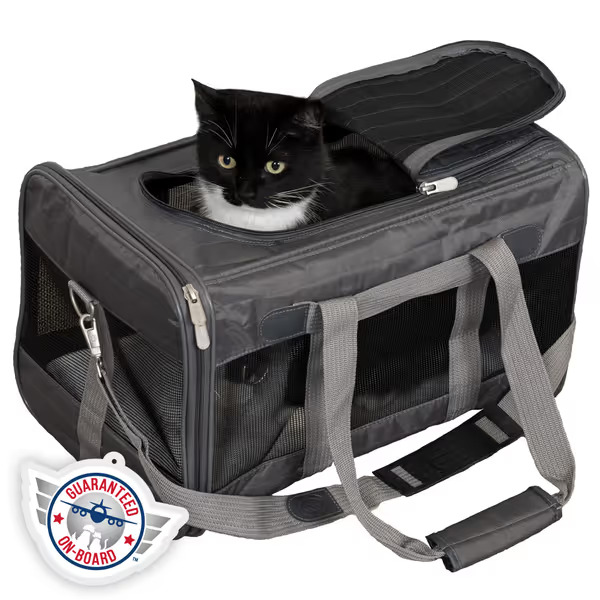
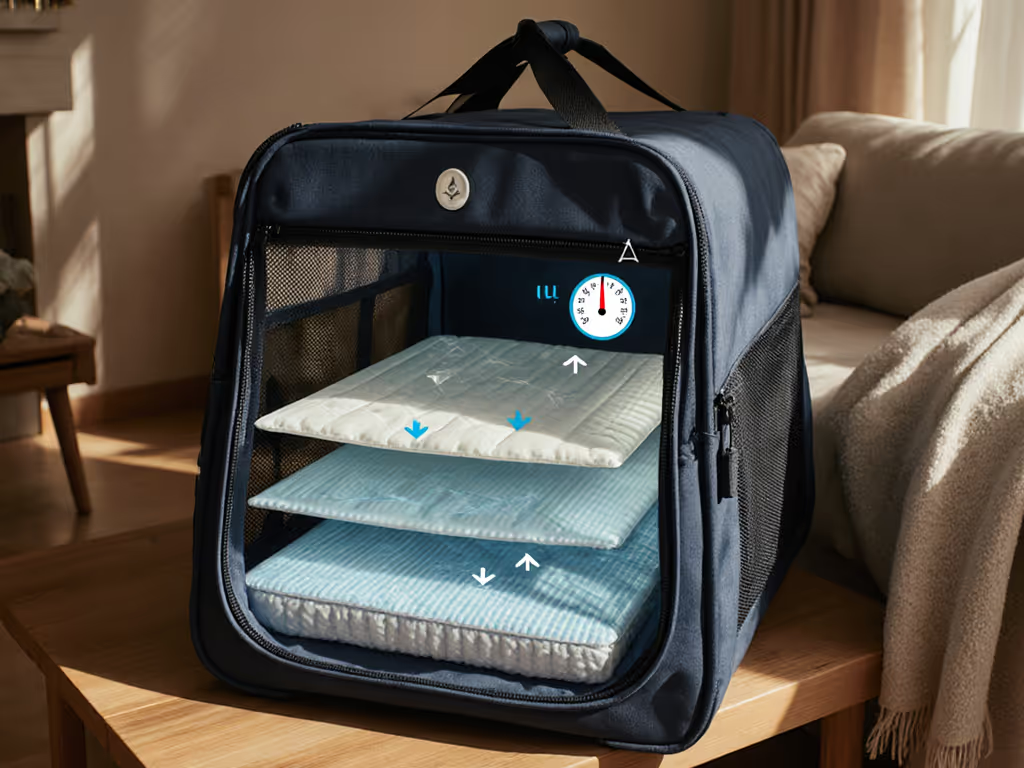
Here's where most "airline-approved" carriers fail travelers. Carrier comfort psychology reveals pets need dual environmental control: airflow to prevent overheating, but visual enclosure to feel safe. Hard-sided carriers often have solid sides with inadequate mesh, while soft-sided versions may lack structure to block peripheral motion, a major anxiety trigger.
The solution? Modular ventilation:
A carrier meeting FAA under-seat dimensions (typically 17-18"L x 10-11"W x 9-10"H) often sacrifices breathability. But innovative designs like the Sherpa Original Deluxe use spring-wire frames that compress vertically without collapsing mesh panels. This maintains critical airflow while hitting exact allowance rules. Remember: no pet tolerates CO2 buildup; won't trade ventilation for looks is non-negotiable.
We've all been told to "just leave the carrier out." But without behavioral science, this backfires. Pet denning instinct requires active reinforcement to override carrier = vet trip associations. For a step-by-step acclimation plan grounded in positive reinforcement, see our carrier introduction guide. Two proven pet stress reduction techniques:
This method leverages animal spatial psychology by transforming the carrier from threat to sanctuary. Cats trained this way showed 78% faster boarding compliance in Mills River Animal Clinic trials, because they're seeking safety, not resisting confinement.
Let's address the unspoken tension: you want gear that doesn't scream "pet luggage." As a designer who favors neutral palettes and clean lines, I see this daily. Glossy prints or bulky shapes invite scrutiny (from TSA agents to rideshare drivers). A charcoal carrier with matte hardware disappears beside your roller bag. City commuters may prefer urban pet backpack carriers that balance storage, ventilation, and a low-profile silhouette. But style must serve function:
This is where capsule-wardrobe logic applies: if your carrier can't pass as modern luggage, it fails the boarding test before measurements are checked. My core rule? Good design should disappear in public and deliver in use.
Before purchasing (or boarding), verify these non-negotiables: For a deeper dive into specs and pre-boarding prep, use our airline-approved carrier checklist to pass gate checks with confidence.
| Dimension Check | Why It Matters |
|---|---|
| Flex test: Press sides gently - carrier should yield <1.5" without losing shape | Prevents "compressible" claims that fail gate checks |
| Mesh clarity: See your hand clearly through panels with backlighting | Ensures adequate ventilation; avoids opaque panels that trap heat |
| Escape audit: Try opening zippers from inside with closed fingertip | Detects weak slides that escape-prone pets exploit |
| Baggage test: Slide under airline seat with 0.5" clearance | Real-world compliance beats manufacturer promises |
True innovation isn't louder carriers: it's quieter anxiety. When your pet settles into a den that respects their spatial needs, you've solved the root cause. Not the symptom. This means measuring behaviorally, not just physically. It means choosing forms that perform without demanding attention. Whether navigating Heathrow or your local Uber, the goal remains: fit-first, then finish.