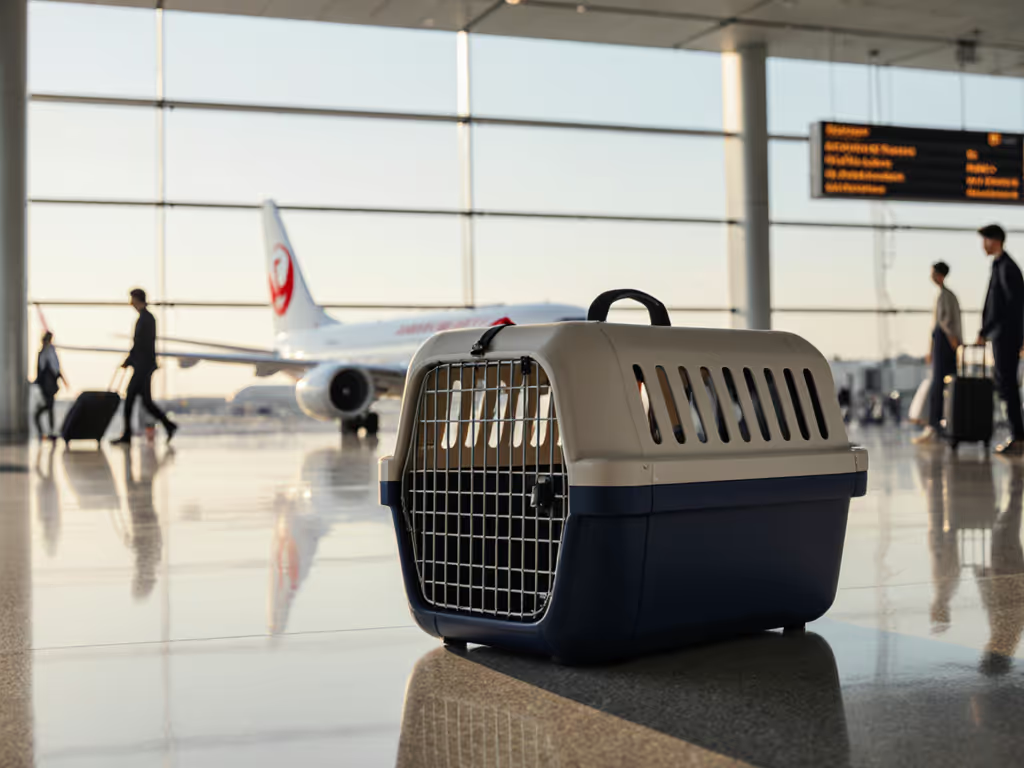
Japan Airline Pet Carrier Rules: Pass Boarding Every Time
19th Jan•6 min read
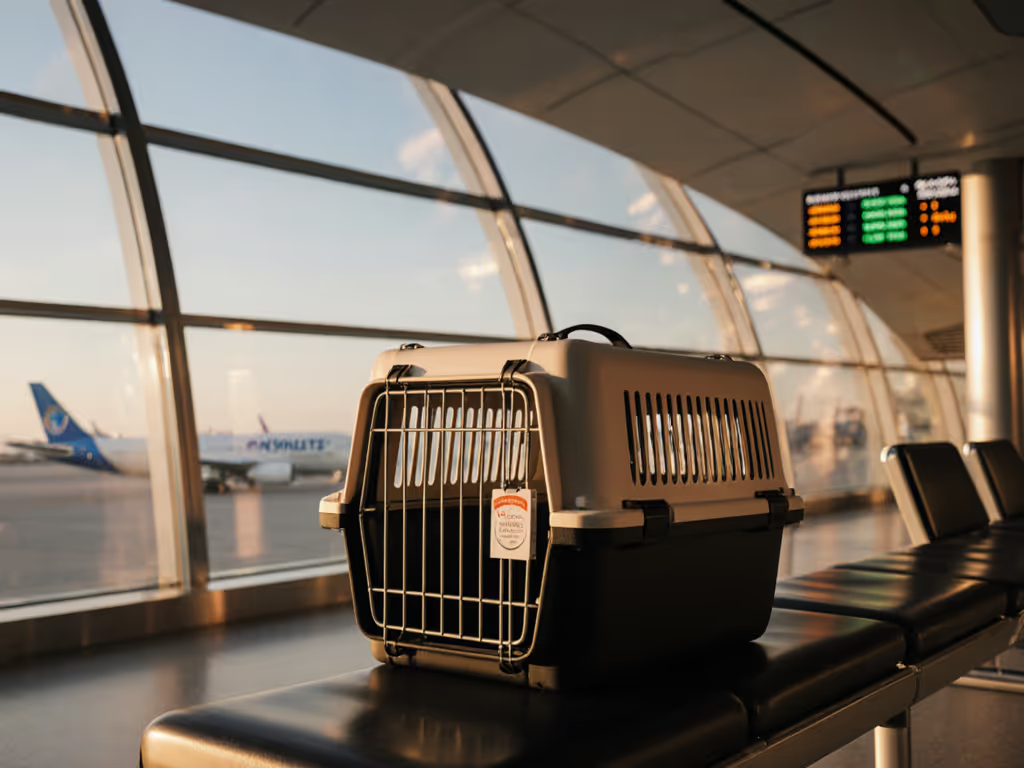
When a carrier label reads "airline-approved," most pet parents assume it meets official requirements. It rarely does. The distinction between pet carrier airline-approved marketing and genuine International Air Transport Association (IATA) compliance is not semantic, it's the difference between smooth boarding and a gate-side confrontation that leaves your pet stressed and your trip derailed.
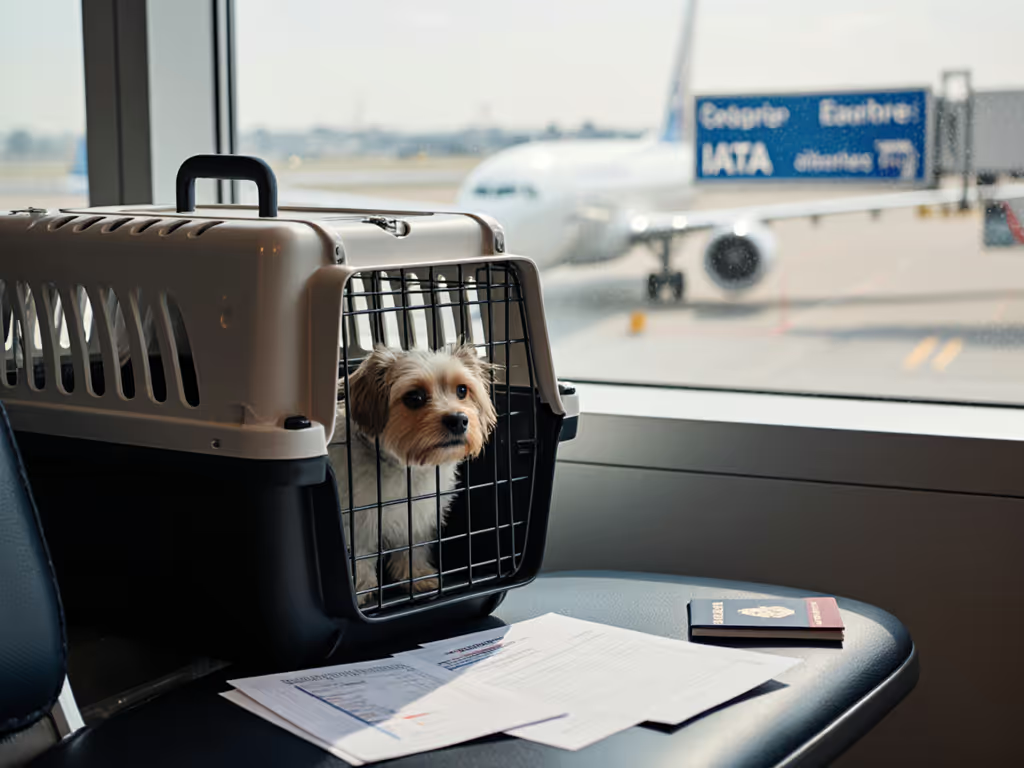
The real gatekeepers aren't airlines. They're the IATA Live Animals Regulations, a globally binding standard that defines exactly how pets must be contained, ventilated, and secured for air transport. Understanding what sits behind that "approved" label (and how to verify it) is the fit-first thinking that separates confidence from risk.
Q: If the website says a carrier is airline-approved, isn't that the same as IATA-compliant?
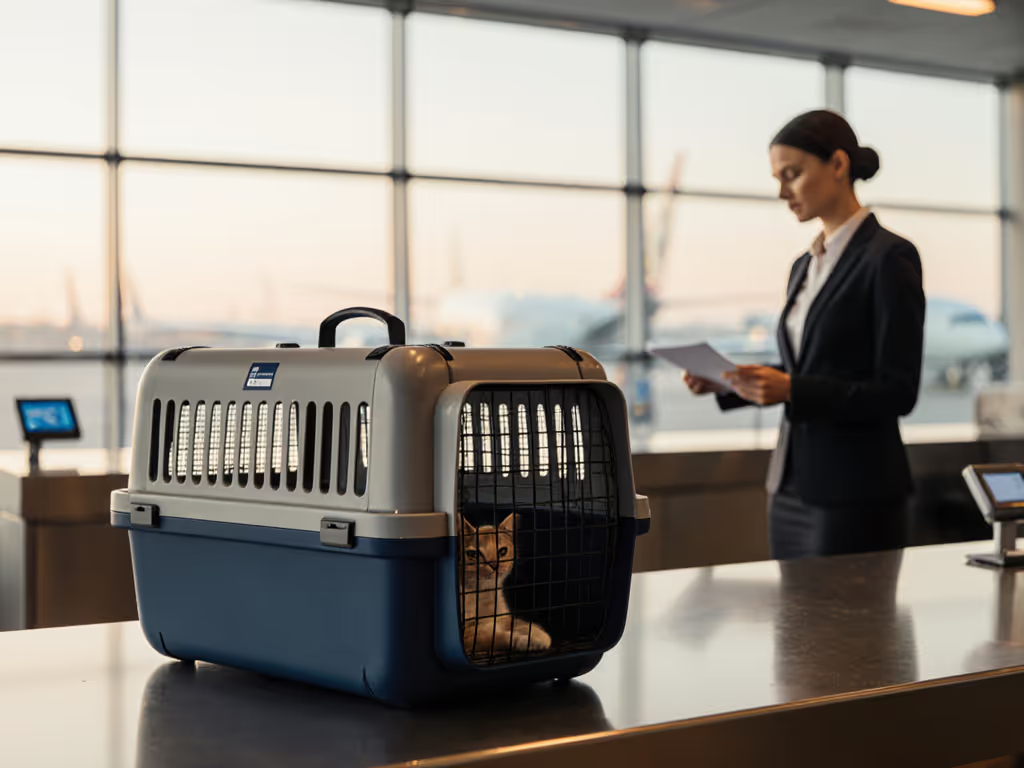
No. "Airline-approved" is a marketing designation, often applied loosely by retailers and manufacturers to carriers that may meet one airline's non-standard preferences but fail official safety and dimensional requirements. For a clear checklist, see our airline-approved carrier specs guide. An IATA-compliant carrier, by contrast, meets documented international standards for construction, ventilation, sizing, and fastening that airlines are required to enforce.
The confusion runs deep because individual carriers have cabin policies that differ from cargo standards, and regional variations exist. A soft-sided carrier approved for in-cabin travel on one carrier may be rejected outright by another for cargo. Meanwhile, a hard-sided crate labeled "pet travel" may have plastic latches instead of metal bolts (instantly non-compliant under IATA spec).
The visual minimalism of a sleek design can obscure what matters most: rule-checked dimensions and verified fastening. I learned this boarding at CDG, watching handlers wave through carriers that matched their owners' luggage while rejecting bright pet totes. My carrier disappeared visually and met every technical requirement (no agent scrutiny, no gate delay). Blend in visually, stand out in quiet function.
Q: What exactly are the IATA requirements for pet carriers?
The IATA Live Animals Regulations (LAR) mandate specific material, construction, ventilation, and sizing criteria. Here's what passes:
Material & Construction
Containers must be built from fiberglass, metal, rigid plastic, or welded metal mesh, never wood alone or collapsible mesh. If using plastic with a separable top and bottom, those halves must be secured together with metal bolts and nuts, not plastic clips, snap closures, or twist-locks. Wire training crates and soft-sided carriers are acceptable only for in-cabin travel and only with airline pre-approval. Compare the tradeoffs in our soft vs hard carrier guide.
The interior must be completely smooth to prevent injury, and the exterior must be leak-proof and escape-proof.
Ventilation
For international travel, ventilation must be present on all four sides; domestic flights require at least three sides. Ventilation holes must be sized to prevent pets from inserting their nose or paws: maximum 1 inch by 1 inch for dogs, 3/4 inch by 3/4 inch for cats. The majority of the ventilation system must be in the upper part of the container to reduce draft at floor level.
Sizing & Clearance
Pets must be able to stand, sit, turn around, and lie down comfortably without touching the top or sides. There must be at least 2 to 3 inches of clearance over the top of the head or ears, whichever is highest. This is where precision measurement becomes non-negotiable. Measure your pet's length from nose to rear, height at the withers (shoulder), and width across the body, then add the clearance margins, fit-first, then finish.
Snub-nosed breeds (pugs, bulldogs, boxers) require one size larger than normal dimensions to accommodate their shorter muzzles and respiratory needs.
Q: Are there crash-tested or safety-rated carrier standards I should know about?
IATA handles air transport; crash-tested carriers fall outside that scope. However, some manufacturers pursue ASTM F2881-23 standard compliance for pet carriers used in vehicles, which evaluates structural integrity during collision. This is distinct from IATA spec and targets a different threat model: ground transport rather than pressurized cabin.
If you plan to drive with your pet in the same carrier used for air travel, verify whether the model has been tested for vehicle safety. Many IATA-compliant carriers are not crash-tested, and vice versa. The audience pain point here is real: multi-mode travel (car to airport to cabin) often forces a choice between air compliance and automotive safety. Transparency about that trade-off matters more than marketing around both.

CPS Certification, by contrast, relates to child passenger seats and does not apply to pet carriers directly, though similar impact-resistance principles inform vehicle-rated pet enclosures. Get clarity with our pet carrier certifications explained.
Q: If a carrier is IATA-compliant, will every airline accept it?
Not necessarily. IATA sets the floor; individual airlines and countries may impose additional requirements. For destination specifics, use our country-by-country IATA requirements resource. Examples include:
Reconfirm with your airline at least 48 hours before departure. Even a compliant carrier doesn't guarantee acceptance if airline-specific or route-specific conditions apply.
Q: How do I measure my pet accurately to ensure fit?
Vague size charts are why many buyers end up with carriers that technically fit but feel cramped to their pet, or are rejected at the gate for being too small. Use this method:
These calculations apply the IATA formula directly. If your pet falls between sizes, choose the larger crate; snub-nosed breeds go up one full size. Double-check with our airline pet carrier measuring guide to avoid last-minute denials.
Another critical detail: pets change posture in carriers. They may curl, lie in a sphinx position, or sit upright. The carrier must accommodate all of these without strain. If a size chart assumes only one posture, it's misleading.
Q: Why does fastening matter so much if the rest of the crate is solid?
Plastic clips and snap closures look secure but fail under pressure: whether from a frightened pet pressing against the lid, turbulence during flight, or handler mishandling. Metal bolts and nuts, while less convenient, create a rigid seal that doesn't fatigue or pop open.
This is where good design truly disappears: the hardware should be invisible to your eye but unfailingly functional. Cheap fastening systems are the first thing to compromise when a manufacturer cuts costs to hit a price point. Check the product detail photos closely: visible plastic anywhere near the top-bottom junction is a red flag.
Q: Can I use a soft-sided carrier for air travel?
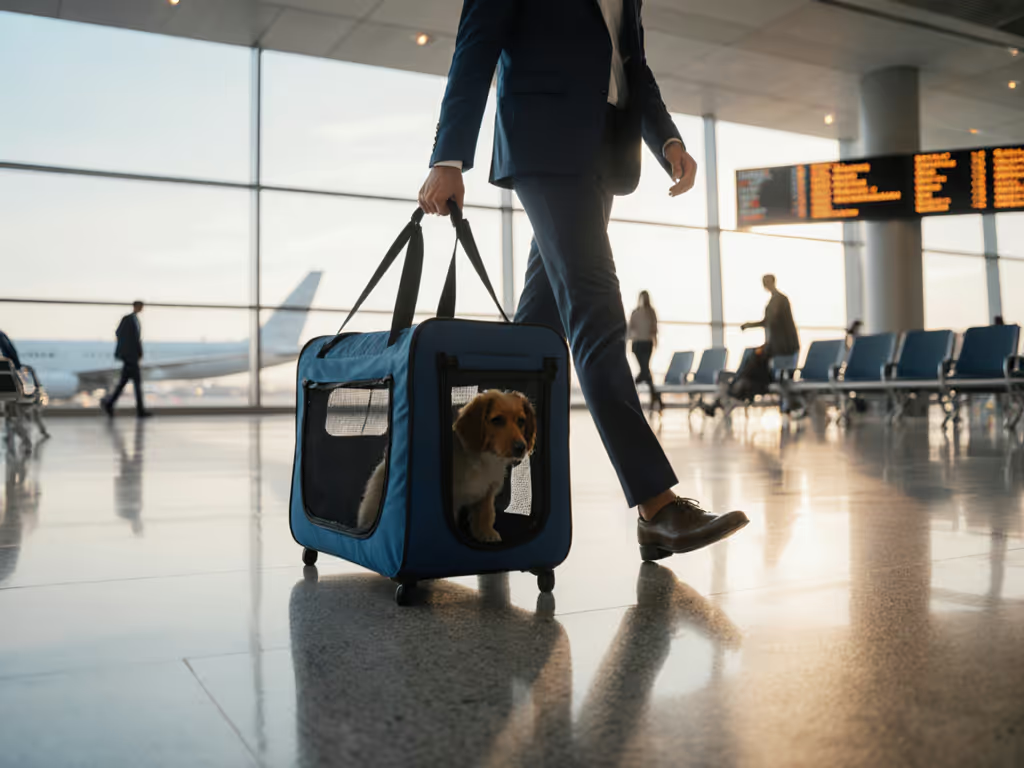
Only for in-cabin travel, and only with explicit airline approval. Soft-sided carriers do not meet IATA cargo standards because they lack the structural rigidity and secure fastening systems required for unaccompanied baggage handling. Cargo travel demands hard-sided, IATA-compliant crates.
The practical split: soft-sided carriers offer ergonomic advantages (lighter, foldable, easier to store) but sacrifice durability and regulatory acceptance. Hard-sided carriers guarantee compliance but require more space and effort.
If you travel primarily by car and occasionally fly in-cabin with airline pre-approval, a soft-sided option may suit your needs, but verify the specific airline's policy first. If you fly cargo or cross international borders frequently, hard-sided is non-negotiable.
Q: What's the real consequence of showing up with a non-compliant carrier?
The airline can refuse to transport your pet, forcing you to reschedule or purchase an emergency replacement at inflated prices. Your pet may experience extended stress in unfamiliar surroundings. If international travel is involved, denial at departure can invalidate visas or travel arrangements.
Gate-side enforcement is inconsistent: some staff conduct thorough checks, others wave through marginal cases. But counting on that inconsistency is not a strategy; it's a gamble. The pain point for your audience is clear: they want certainty, not luck.
Before purchasing any carrier, verify three things:
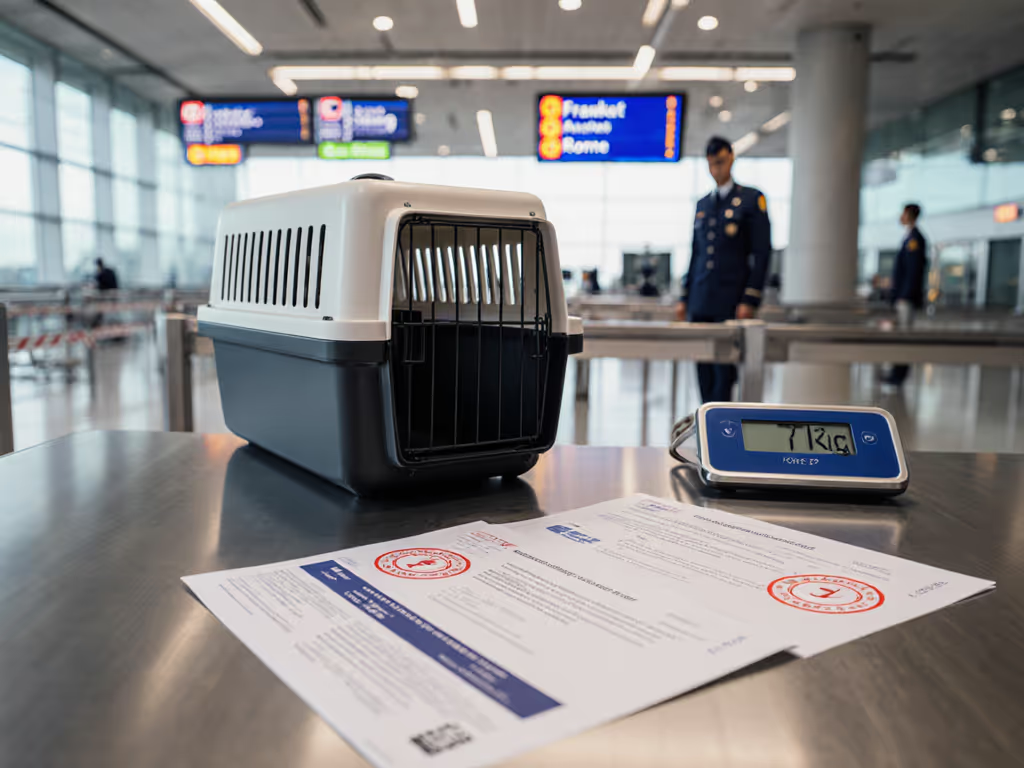
IATA specification sheet: The manufacturer should publish exterior and interior dimensions, material type, fastening description, and ventilation design. If they don't, ask. Vague listings suggest they haven't engineered to spec.
Airline confirmation: Contact your carrier and confirm dimensions, material approval, and any breed-specific rules for your specific pet before buying.
Measurement accuracy: Take multiple measurements of your pet, accounting for posture variation, and cross-reference against the carrier's published interior dimensions. Add the IATA-mandated clearance to your pet's measurements, not just to the carrier specs, the math must leave air space, not tight fit.
The goal isn't to decode regulations for their own sake. It's to build a carrier choice that delivers silently: your pet travels safely, your airline encounters no obstacle, and you pass check-in with the same unnoticed ease as any other traveler with properly scaled luggage. That's where compliance becomes invisible, and function alone remains.
When you get the fit and rules right, the carrier itself disappears. Your pet arrives calm, you stay composed, and the gate agent waves you through. That is the standard worth pursuing.